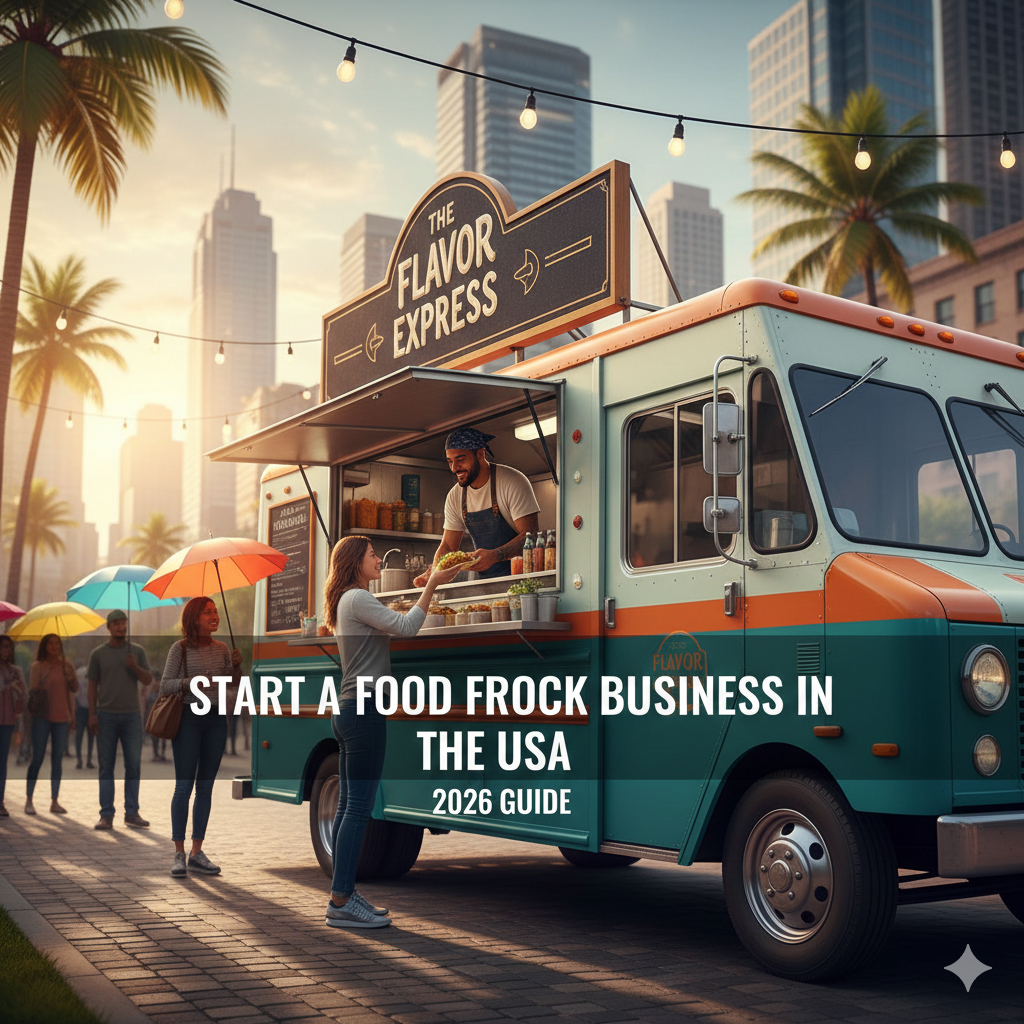
Starting a food truck business in the USA is an exciting venture that combines culinary creativity with the freedom of the open road. However, it is also a heavily regulated industry that requires meticulous planning.
Here is a step-by-step guide to getting your wheels rolling.
🏗️ Phase 1: Planning and Strategy
1. Define Your Concept and Menu
Success in the food truck world depends on a niche. Your menu should be small, high-quality, and fast to prepare.
-
The "Vibe": Does your truck serve street tacos, gourmet sliders, or fusion dessert?
-
The Look: Your truck’s "wrap" (the exterior design) is your primary marketing tool. It needs to be bold and recognizable.
2. Write a Business Plan
You will need this to secure funding or permits. It should include:
-
Market analysis (Who is your competition?).
-
Financial projections (Food costs, fuel, maintenance, and labor).
-
Marketing strategy (Social media is the lifeblood of food trucks).
📜 Phase 2: Licenses and Legal Requirements
This is the most challenging part, as rules vary by city and state. You cannot simply park anywhere and start selling.
-
Business License: A standard license to operate a business in your state.
-
Employer Identification Number (EIN): A federal tax ID from the IRS.
-
Health Department Permit: This is the most critical. Your truck must pass a rigorous inspection regarding food storage temperatures, sanitation, and water systems.
-
Mobile Food Vendor Permit: A specific permit allowing you to sell food from a vehicle.
-
Parking and Zoning Permits: Many cities have "exclusion zones" where food trucks are not allowed.
🚛 Phase 3: Sourcing Your Truck
You have three main options for acquiring your vehicle:
| Option | Estimated Cost | Pros | Cons |
| New Custom Truck | $100k - $175k+ | Fully warrantied; built for your menu. | Very high initial investment. |
| Used Food Truck | $40k - $80k | More affordable; often includes equipment. | Risk of mechanical failure; hidden wear. |
| Leasing | $2k - $5k / month | Lower barrier to entry. | You don't own the asset; high long-term cost. |
Pro Tip: Ensure your truck is "code-compliant" for your specific city before buying. A truck built for California may not meet the health codes of New York.
🍳 Phase 4: Operations and Logistics
1. The Commissary Kitchen
Most cities require food truck owners to prepare and store food in a licensed commercial kitchen (commissary) rather than at home or on the truck itself. You will pay a monthly fee to use their prep space, sinks, and storage.
2. Point of Sale (POS) System
You need a mobile-friendly POS like Square, Toast, or Clover that can handle credit card transactions in areas with weak Wi-Fi and track your inventory in real-time.
3. Staffing
Food trucks usually operate with a "lean" crew—typically 2 to 3 people. One person handles the window/POS, and 1 or 2 handle the cooking.
📍 Phase 5: Location and Marketing
Finding Your "Spot"
The three most common locations for food trucks are:
-
Street Parking: High foot traffic but involves strict time limits and parking fees.
-
Food Truck Parks: Dedicated lots where trucks gather. You pay "rent," but the customers are guaranteed.
-
Events and Catering: Weddings, breweries, and festivals are often more profitable than daily street parking.
Digital Presence
Since you are mobile, your customers need to know where you are.
-
Instagram/TikTok: Post your daily location every morning.
-
Google Business Profile: Keep your hours updated.
-
Apps: Register on apps like StreetFoodFinder or Roaming Hunger.