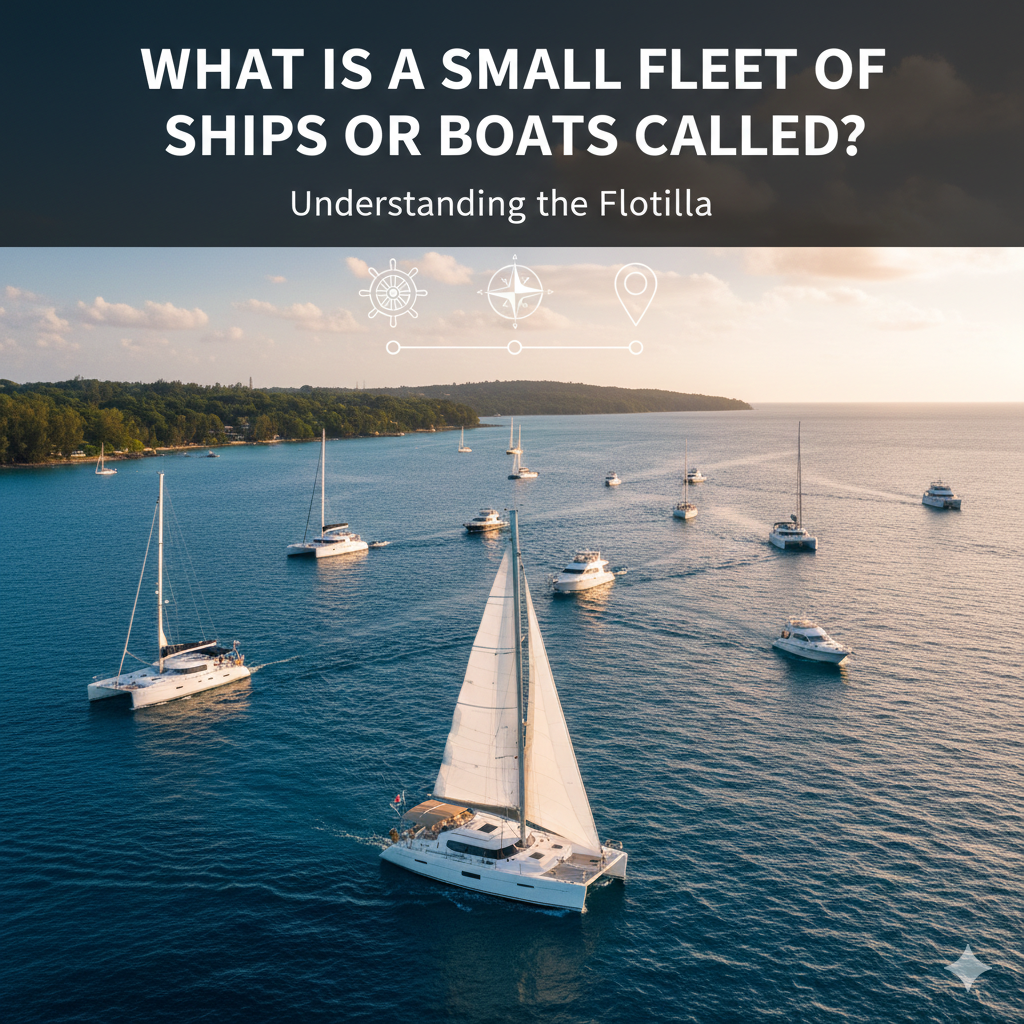
If you have ever looked out over a harbor and seen a grouped collection of vessels moving in unison, you might have wondered about the correct terminology. While we often use the word "fleet" as a catch-all term, the specific term for a small fleet of ships or boats is a Flotilla.
Understanding these maritime distinctions isn't just for sailors; it’s for anyone interested in history, logistics, or even weekend hobbyists organizing a group outing on the water.
What Exactly is a Flotilla?
Derived from the Spanish word for "small fleet" (flota), a flotilla typically refers to a group of small warships or, in a civilian context, a collection of similar boats—like yachts or kayaks—traveling together for a specific purpose.
In naval hierarchy, a flotilla is usually:
-
Smaller than a Fleet: A fleet is a massive organization, often covering entire oceans.
-
Homogeneous: Usually made up of the same type of vessel (e.g., a flotilla of destroyers or a flotilla of sailing boats).
-
Task-Oriented: Formed for a specific mission or event.
Fleet vs. Flotilla vs. Squadron: What’s the Difference?
Navigating maritime vocabulary can be as tricky as navigating a rocky coastline. Here is a quick breakdown to help you keep your terms straight:
| Term | Typical Size | Common Usage |
| Fleet | Large (50+ vessels) | The highest level of organization; often commanded by an Admiral. |
| Flotilla | Small to Medium | Usually small vessels (like corvettes or PT boats) or civilian groups. |
| Squadron | Medium | Often refers to a permanent unit of larger ships (like cruisers). |
| Armada | Very Large | Historically used for a massive, invading fleet of warships. |
The Rise of the "Civilian Flotilla"
In 2026, the term has moved beyond the military. Today, you are most likely to encounter a flotilla in the world of leisure and tourism.
-
Flotilla Sailing: This is a popular vacation style where a group of chartered yachts sail together, led by a "lead boat" with a professional crew. It offers the freedom of sailing with the safety of a group.
-
Community Events: Many coastal cities in the USA, like San Antonio with its River Walk or coastal cities in Florida, host holiday flotillas (boat parades) where locals deck out their small fleets in lights.
Why Does the Terminology Matter?
Using the right word—flotilla—helps in maritime communication and safety. When a harbor master or coast guard hears that a "flotilla" is approaching, they immediately understand that a group of smaller vessels is moving as a single unit, which is vital for traffic management.
Conclusion
Whether it’s a tactical naval unit or a group of friends on sun-drenched catamarans, a small fleet of ships or boats is a powerful symbol of coordination and community on the water. Next time you see a cluster of vessels on the horizon, you’ll know exactly what to call it.